

Industry Report: Electronics Manufacturing Services
A $1.1 Trillion Industry by 2034!

Here, at EquityEdge Research, we deep dive into complex Articles and Reports and make it easier for you by presenting everything, RIGHT HERE!!
Please Fill the form Below if you are interested in our Services and would like a Free Sample of our Equity Research Report covering a Small/Micro-cap Company.
What Will We Discuss Today?
Global EMS Industry Overview.
Indian EMS Industry Overview.
Export & Import Dynamics.
Industry Segmentation.
Major Players in India.
Key Trends.
Risks & Challenges.
Conclusion/Outlook.
1. Global EMS Industry Overview:
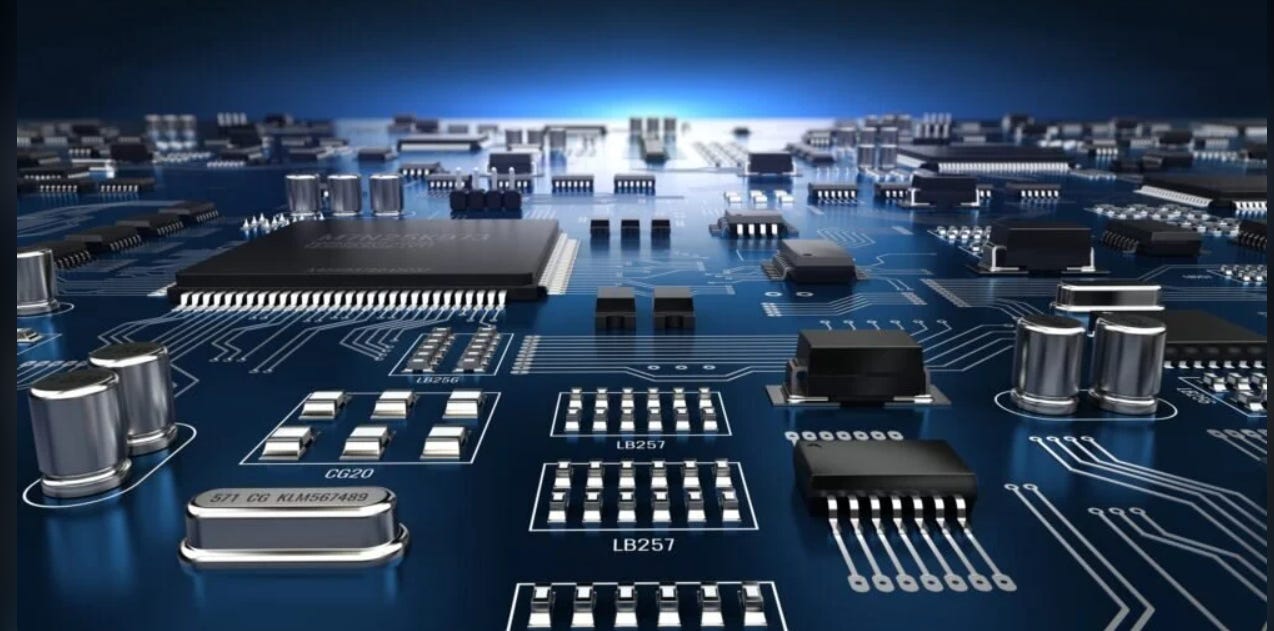
If you’ve ever picked up your smartphone, turned on your laptop, or glanced at your smart TV, you’ve indirectly given a high-five to the Electronics Manufacturing Services (EMS) industry.
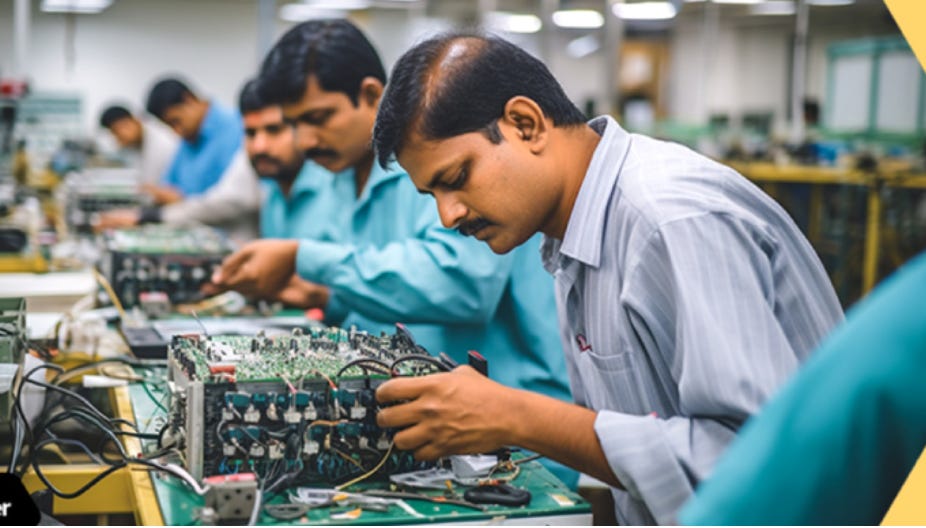
EMS companies take an original equipment manufacturer’s (OEM’s) design—be it for a sleek smartphone or a complex automotive control unit—and handle everything from parts sourcing to assembly, testing, and final distribution. They let brands focus on design and marketing while EMS players manage the manufacturing details.
OEMs outsource to EMS to optimize costs, speed up time‑to‑market, and leverage specialized expertise in complex and miniaturized electronics.
Major EMS hubs include Shenzhen (China), Penang (Malaysia), Vietnam, Indonesia, the U.S. (nearshoring to Mexico), and Eastern Europe; India is an emerging hub thanks to “Make in India” and PLI schemes.
1.1 Market Size and Growth Trajectory:
In 2024, the global EMS market was valued at approximately USD 577.32 billion (nearly ₹46 lakh crores).
It’s projected to reach USD 617.90 billion in 2025 and soar to USD 1,130.89 billion by 2034 at a 6.95% CAGR for 2025–2034.
An alternate estimate (Fortune Business Insights) puts it at USD 569.03 billion in 2024 growing to USD 968.41 billion by 2032 at a 6.9% CAGR.
1.2 Key Players and Competitive Landscape:
Foxconn (Hon Hai Precision): Assembles a large share of Apple’s iPhones and AirPods, plus devices for Xiaomi and Sony. In 2024, Foxconn pledged to deploy over 1 million industrial robots across its factories to streamline production and curb labor costs .
Pegatron: Based in Taiwan; beyond smartphones, it serves gaming, networking, and EV component segments. Rising costs and U.S.–China trade tensions have led Pegatron to shift part of its output to Vietnam and Indonesia .
Jabil: U.S.‑headquartered with strengths in healthcare devices, aerospace, and complex prototyping. Its 2024 engineering‑services arm saw strong demand for design outsourcing.
Flex (formerly Flextronics): U.S.‑based with major automotive (EV assemblies), industrial, and consumer electronics operations. In 2024, Flex’s “sustainable packaging” program cut plastic use, introduced closed‑loop recycling, and highlighted EMS’s role in eco‑innovation .
Mid‑tier and Niche Players: Sanmina (U.S.) specializes in high‑precision PCB assembly and defense electronics; Wistron (Taiwan) focuses on laptops and cloud servers; Venture Corporation (Singapore) serves medical and industrial automation.
Indian EMS Players: Dixon Technologies partners with Samsung and Xiaomi for selected segments; Amber Enterprises focuses on consumer appliances. These firms are early‑stage compared to global giants.
1.3 Regional Analysis:
Asia Pacific (36–45% of global EMS revenues in 2024): China remains dominant with mature supply chains and competitive labor; rising costs and trade disputes are pushing some production to Vietnam, Malaysia, and Indonesia. India held about a 2–3% share in mid‑2024 but is poised to grow under PLI incentives, especially in Tamil Nadu, Telangana, and Gujarat.
North America (20–25% share): The U.S. is seeing “reshoring” and “nearshoring” in automotive, defense, and medical electronics. Mexico, with its skilled workforce near the U.S. border, has attracted investments for EV modules and medical devices.
Europe (20–25% share): Germany, the U.K., and Eastern Europe host partnerships with automotive OEMs (Mercedes, BMW, VW) for EV electronics, ADAS, and infotainment systems.
1.4 Technological Trends and Innovations:
Advanced Robotics & Automation: Foxconn’s 2023 commitment to 1 million robots illustrates EMS’s push toward AI‑powered robotic arms, vision systems, and AGVs, reducing human error and boosting throughput .
Miniaturization: Demand is surging for tiny, multifunctional PCBs in wearables, drones, and implantable medical devices. EMS firms are investing in MEMS, ultra‑thin semiconductor packaging, and advanced PCB design to pack more computing power into smaller footprints . India’s nascent IoT PCB manufacturing for agricultural sensors and health wearables is gaining traction.
Sustainability: EMS providers are adopting energy‑efficient production lines, RoHS‑compliant materials, and closed‑loop recycling. Flex’s 2024 “sustainable packaging” rollout (100% recycled plastics, reusable containers) spotlights EMS’s role in green manufacturing . Indian EMS hopefuls must align with global ESG standards to land Western contracts.
Digital Twins & Predictive Analytics: Virtual replicas of production lines enable yield optimization and preventive maintenance, allowing proactive downtime management, defect reduction, and lean manufacturing.
1.5 Global Industry Drivers and Secular Trends:
Consumer Electronics Demand: Smartphones, laptops, smart TVs, wearables, and gaming consoles accounted for roughly 45–50% of EMS revenues in 2024 . Smartphone penetration in emerging markets (including India) is north of 80%, fueling EMS growth.
Automotive Electrification: EVs require complex electronics—battery management systems (BMS), power inverters, ADAS modules, and infotainment clusters. In 2024, Asia Pacific EMS saw an uptick from China’s EV boom, while North American and European EMS players reported surging automotive‑related revenues .
IoT & 5G Rollouts: Smart factories (Industry 4.0), smart cities, and connected sensors are multiplying. With 5G predicted to cover 60% of the world population by 2025, EMS firms producing small cells, base stations, and 5G modules are in high demand .
Post‑Pandemic Supply‑Chain Resilience: OEMs are wary of single‑source dependencies after COVID-19. EMS providers that diversify component sourcing and offer multi‑location manufacturing now enjoy premium status.
Rising Labor Costs in Traditional Hubs: China’s labor rates have climbed significantly, prompting shifts to lower‑cost locations like Vietnam, India (still nascent), and Mexico. Government incentives—such as India’s Production-Linked Incentive (PLI) for electronics—can sway OEMs toward these new hubs.
1.6 Global Challenges and Risks:
Cyclical Demand & Margin Pressure: EMS is volume‑driven; downturns in consumer electronics can lead to idle lines and margin squeezes. Typical EMS gross margins hover in the high single digits to low double digits.
Geopolitical Tensions & Trade Wars: U.S.–China semiconductor disputes, U.K.‑EU Brexit fallout, and India–China border issues can disrupt component supplies, trigger tariffs, and affect workforce availability. Sudden policy shifts may force EMS players to reengineer supply chains rapidly.
Supply‑Side Constraints: Only a few fabs produce cutting‑edge nodes (like TSMC’s 5 nm). When fab capacity is tight, EMS partners struggle to secure critical chips. The 2020–2022 chip crunch left many EMS lines idle for lack of components.
Technological Obsolescence: Electronics evolve rapidly. A production line built for 4G modems can become obsolete when 5G chipsets arrive. Continuous CapEx for retooling, upgrading test fixtures, and retraining workers is costly.
Regulatory & Environmental Scrutiny: Growing e‑waste concerns demand cleaner manufacturing, proper disposal, and strict RoHS/REACH compliance. Smaller EMS firms—especially in developing markets—may struggle to meet these standards financially.
2. Indian Electronics Manufacturing Services Snapshot
2.1 Overview:
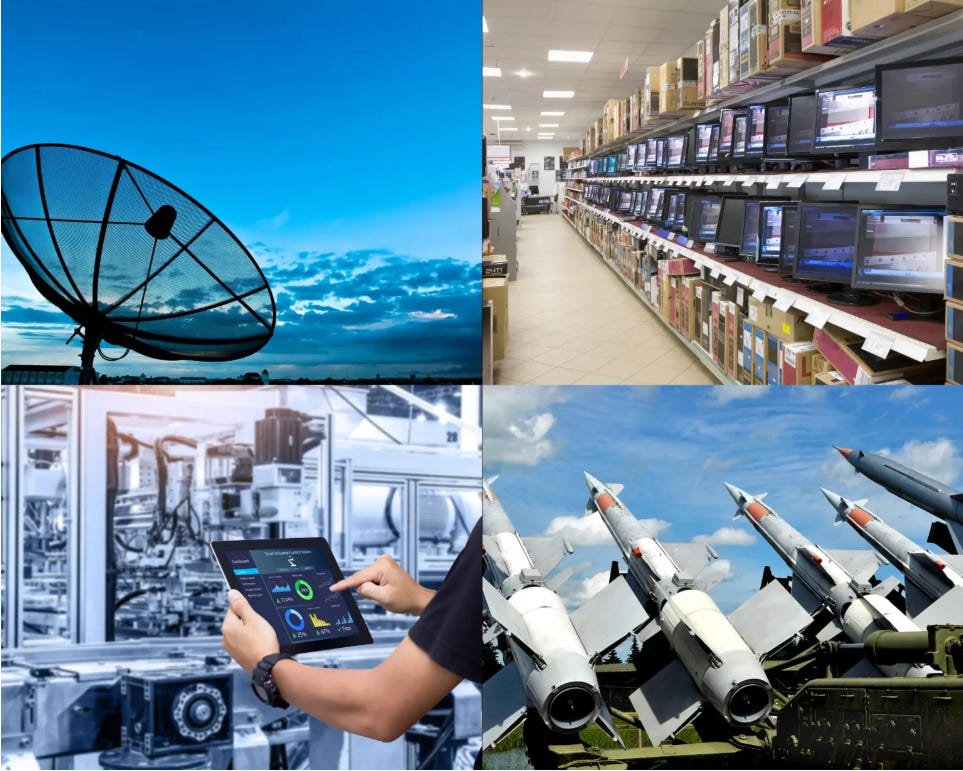
The Indian Electronics Manufacturing Services (EMS) industry is undergoing rapid transformation, driven by strong government support, evolving global supply chains, and advancing technologies. The sector is gaining prominence as a global manufacturing hub, underpinned by India's strategic push to boost electronics production and exports.
2.2 Market Size and Expansion Dynamics:
Current and Future Trends:
FY2024 Market Size: USD 61.85 billion.
GDP Contribution: Domestic electronics production accounted for 2.8% of India’s GDP in FY24, expected to rise to 5.3% by FY27.
Growth Projections:
EMS industry expected to grow to USD 348.17 billion by 2031.
Mobile and consumer electronics manufacturing to grow at 32% CAGR.
Domestic electronics production expected to grow at 24% CAGR through FY27.
Export Growth:
Electronics Exports Growth (FY21–FY23): 57% increase.
Mobile Phone Exports: Reached USD 15 billion in FY24.
Global Standing: India has emerged as the 5th-largest mobile phone exporter.
2.3 Segment-Wise Contribution:
Mobile Phones:
Dominance: Accounts for ~40% of EMS revenue.
Production Growth: From 60 million units in 2014 to 310 million in 2023.
High Volume, Low Margin: Despite scale, margins remain relatively thin.
Consumer Electronics and Appliances:
Significant contributor, with expanding product categories and rising penetration in tier-2/3 cities.
High-Margin Emerging Segments:
Wearables & Hearables.
Automotive Electronics (especially EV components).
Industrial IoT Devices.
Growth Rate: 25–30% CAGR, supported by adoption of 5G and sustainability-focused innovations.
2.4 Key Value Chain Components:
Printed Circuit Board Assembly (PCBA)
FY23 Market Size (excluding mobiles): INR 800 billion.
Growth Outlook: Expected CAGR of ~39% from FY22 to FY26.
PCBA is a critical component of the EMS value chain, and growth here is essential for backward integration.
Original Design Manufacturing (ODM)
The industry is witnessing a shift from contract manufacturing to ODM.
Rationale: OEMs increasingly require product innovation and design capabilities.
Global Trend: Share of ODM in total EMS is rising internationally, with India catching up.
3. Import and Export Dynamics:
3.1 Export Trends:
Strong Export Growth
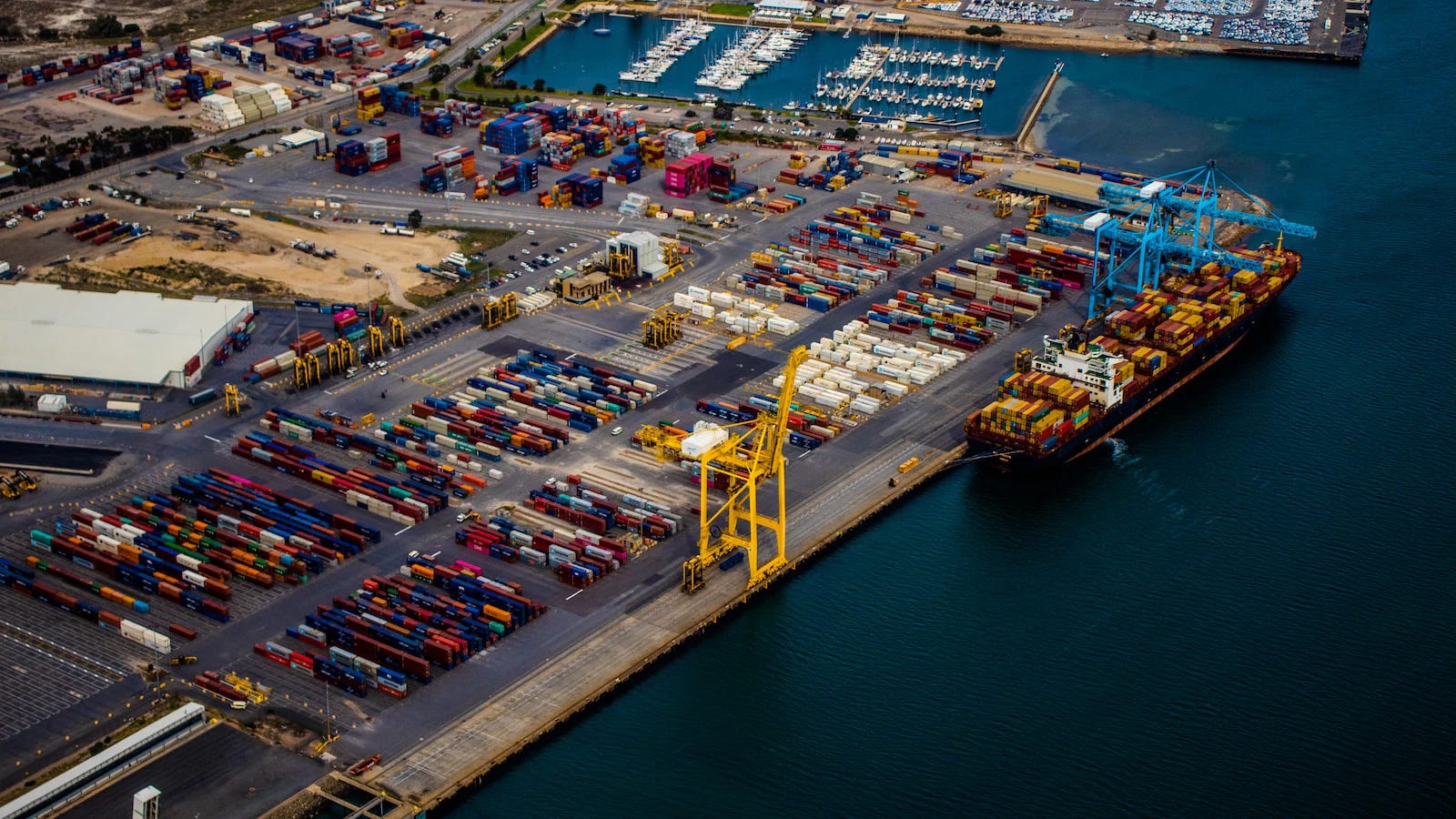
India exported electronics goods worth USD 29.12 billion in FY24, marking a robust 23.6% year-on-year increase.
The share of electronics in India’s total merchandise exports rose to 6.6%–6.7% in FY24, reflecting the sector’s growing global relevance.
Leading Export Categories
Mobile phones are the top export category, reinforcing India’s position as the world’s second-largest mobile phone manufacturer.
Smartphone exports alone were projected to reach USD 15.6 billion in FY24.
Key Export Destinations: Major markets for Indian electronics include the United States, United Arab Emirates, Netherlands, United Kingdom, and Italy.
Government Export Targets: The Indian government aims to achieve USD 120 billion in electronics exports by FY26, aligned with the broader vision of becoming a global EMS hub.
3.2 Import Trends:
Historical Import Dependency
India has traditionally relied on imports for critical electronic components, especially from China.
In FY23, total electronics imports stood at USD 73.46 billion, underlining the large trade gap in this sector.
Import Substitution in Progress
Driven by the PLI schemes and higher import duties, mobile PCBA (Printed Circuit Board Assembly) imports have significantly declined from FY18 to FY24.
Increased local production is reducing dependency on imports for finished mobile components.
Key Imported Items
India continues to import:
Telecom and smartphone parts.
Laptops and PCs.
Industrial electronic inputs.
C) Trade Balance Developments
Shift Towards Balanced Trade
Although India remains a net importer of electronics, proactive policy measures are gradually improving the trade balance.
PLI incentives, rising domestic manufacturing, and export momentum are narrowing the gap.
Trade Surplus with the US
A key milestone: India achieved a trade surplus of USD 8.7 billion in electronics exports to the United States in FY24, reversing its earlier deficit.
Bluewaveconsulting, wrightresearch, jmfl, equitymaster, HDFC sec, ET, exportimport data, Business Standard, EY, communicationtoday, marc.
If you like the hard work we put in, you can invest in us:
For our Non-Indian audience: You can donate to us through PayPal. Click here.
For our Indian audience, UPI QRs are given below:
4. Segment-wise Breakdown:
4.1 Design & Engineering Services:
Purpose: Helps companies turn ideas into manufacturable products.
Key Activities:
Concept & Feasibility Study – Checks if the product can be made cost-effectively.
PCB Layout Design – Designs circuit boards for optimal performance.
Prototyping – Creates early samples for testing.
DFM (Design for Manufacturing) – Ensures the design is easy to mass-produce.
Firmware & Software Integration – Adds basic OS/drivers.
Example: A smart thermostat’s circuitry is designed to minimize power consumption.
4.2 Component Sourcing & Procurement:
Purpose: Ensures the right parts are available at the best price.
Key Activities:
Supplier Selection – Chooses reliable vendors for chips, resistors, displays, etc.
BOM (Bill of Materials) Management – Lists all required components.
Inventory Management – Prevents shortages or excess stock.
Cost Negotiation – Bulk purchasing to reduce expenses.
Example: Sourcing OLED screens for a fitness tracker from Samsung or LG.
4.3 PCB Assembly (PCBA):
Purpose: Manufactures the "brain" of electronic devices.
Key Processes:
SMT (Surface Mount Technology) – Places tiny components (chips, resistors) on PCBs.
Through-Hole Assembly – For larger components (connectors, capacitors).
Reflow Soldering – Melts solder to attach components.
AOI (Automated Optical Inspection) – Scans for defects.
Example: Assembling the motherboard of a gaming console.
4.4 Product Manufacturing & System Integration:
Purpose: Turns PCBs into finished products.
Key Steps:
Enclosure Manufacturing – Makes plastic/metal casings.
Final Assembly – Puts PCBs, batteries, screens, and buttons together.
Cable & Harness Assembly – Connects internal wiring.
Conformal Coating – Protects PCBs from moisture/dust.
Example: Assembling an entire smartphone (screen, battery, PCB, casing).
4.5 Testing & Quality Assurance (QA):
Purpose: Ensures products work correctly before shipping.
Key Tests:
Functional Testing – Checks if power, buttons, and ports work.
Environmental Testing – Tests durability under heat, humidity, and vibration.
Burn-In Testing – Runs devices for long hours to detect early failures.
EMI/EMC Testing – Ensures no interference with other electronics.
Example: Testing a drone’s battery life and wireless connectivity.
4.6 Logistics, Distribution & After-Sales Support:
Purpose: Delivers products to customers and handles returns/repairs.
Key Activities:
Warehousing – Stores finished products before shipping.
Order Fulfillment – Packs and ships products globally.
Reverse Logistics – Manages returns, repairs, and recycling.
Warranty Services – Handles defective product replacements.
Example: Amazon ships smart speakers and handles defective unit returns.
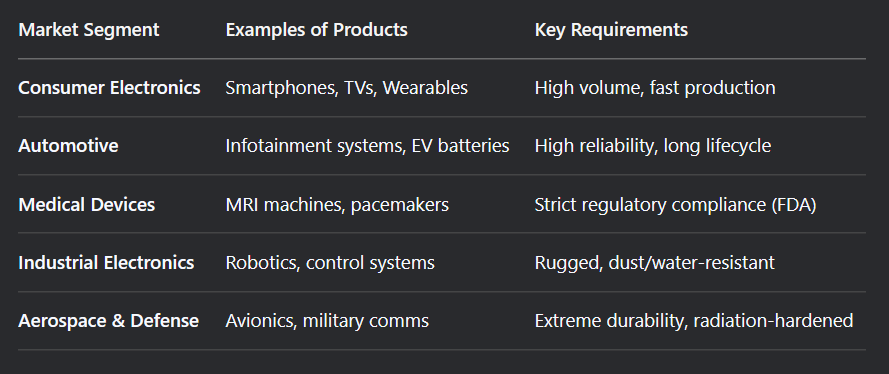
4.7 EMS Industry by Market Segment:
5. Major Players in India Competing for a Slice:
5.1 Dixon Technologies:
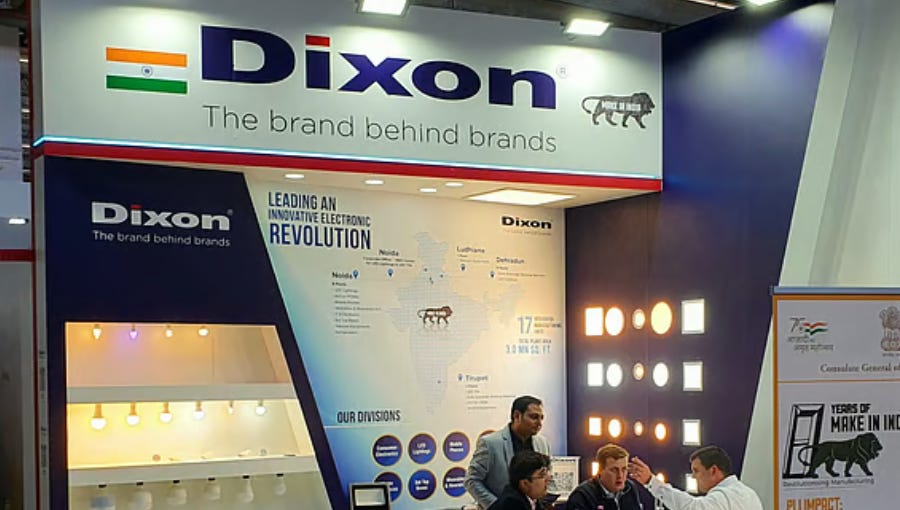
Largest Indian EMS; consumer electronics, mobile phones, appliances; clients include Samsung, Xiaomi, Panasonic. Strong PLI scheme alignment, extensive manufacturing footprint.
5.2 Tata Electronics:
Precision parts for Apple, semiconductor ambitions, strong Tata Group backing; focus on building India’s chip ecosystem.
5.3 Avalon Technologies:

End-to-end EMS, vertical integration, strong in clean energy, mobility, aerospace, defense, and industrial applications.
5.4 Amber Enterprises:

Leader in HVAC (room air conditioners), mobility, and components; 27 manufacturing units; strong supply chain.
5.5 Samsung Electronics India:
Major mobile phone and consumer electronics manufacturing; among world’s largest mobile phone plants.
6. Key Trends:
6.1 Government Initiatives and Policy Support:
India’s policy framework is one of the strongest pillars supporting EMS expansion.
Production-Linked Incentive (PLI) Schemes:
Schemes targeting Large-Scale Electronics Manufacturing, IT Hardware, and Electronic Components offer financial rewards tied to incremental sales. This incentivizes scale and localization while reducing import dependency.
Notably, the PLI for components has a ₹23,000 crore budget over six years, focused on domestic value addition.“Make in India” and “Digital India”:
These flagship programs aim to establish India as a global manufacturing hub while improving digital infrastructure, ease of doing business, and tech penetration across the economy.Infrastructure Support via EMCs and CFCs:
Electronics Manufacturing Clusters (EMCs) and Common Facility Centres (CFCs) provide shared utilities and infrastructure—lowering capital costs and accelerating factory setup timelines for EMS players.
6.2 Growing Domestic Demand:
The Indian market itself is becoming a compelling growth story.
Rising Consumption of Electronics:
A growing middle class, rising incomes, and digital lifestyles are driving demand for smartphones, wearables, laptops, and smart home devices. India is no longer just a supply base—it’s a thriving consumer market.Cross-Sectoral Tech Adoption:
Electronics are seeing rising usage across electric vehicles (EVs), healthcare, industrial automation, and even agriculture—pushing up demand for sensors, embedded systems, and power electronics.
6.3 Global Supply Chain Rebalancing:
Post-COVID geopolitics and trade friction are reshaping sourcing decisions.
“China Plus One” Strategy:
Global OEMs are actively diversifying away from China to reduce geopolitical and operational risks.
India’s appeal lies in its large talent pool, cost competitiveness, improving infrastructure, and proactive policy incentives. States like Tamil Nadu, Karnataka, and Uttar Pradesh are emerging as key EMS hubs.
6.4 Technological Advancements:
Indian EMS companies are upgrading from manual assembly to smart manufacturing.
Industry 4.0 Integration:
Automation, IoT, AI, and data analytics are increasingly used to improve quality, reduce defects, and optimize factory operations. Predictive maintenance and smart line reconfiguration are becoming standard.Product Miniaturization:
Growing demand for sleek, high-performance devices is driving adoption of technologies like Chip-on-Board (COB) and System-in-Package (SiP), especially in wearables and medical electronics.5G Infrastructure Deployment:
India’s 5G rollout is creating demand for advanced telecom gear—like small cells, RF modules, and high-frequency PCBs—giving EMS players new verticals to serve.
6.5 Structural Industry Shifts:
The EMS model itself is evolving beyond contract assembly.
OEM Outsourcing on the Rise:
Global and domestic OEMs are increasingly outsourcing manufacturing to EMS and Original Design Manufacturers (ODMs), allowing them to focus on design and branding. This is driving full-stack service development among Indian EMS firms.Component Ecosystem Strengthening:
India is actively working to reduce dependence on imported parts—especially from China.
This includes PLI schemes for component manufacturing, joint ventures with global players, and policy incentives for local sourcing.
6.6 Rising Export Competitiveness:
India’s electronics exports are finally scaling up meaningfully.
In FY24, electronics exports crossed ₹1.8 lakh crore, led by mobile phones, LED products, and components.
India is gaining credibility in global supply chains due to its cost advantage, improving quality standards, and robust government support.
Major players like Apple, Samsung, and Flex are increasingly sourcing or assembling from India, making it a core node—not just a fallback—in global supply chains.
7. Key Risks & Challenges For The Industry:
7.1 High Production Costs vs. Global Peers:
Indian EMS units face 10–20% higher costs than China, Vietnam, and Mexico.
Port delays (2.5 days vs. 0.5 days in China) and poor energy efficiency inflate logistics costs by 12–18%.
7.2 Import Dependency & Supply Chain Risks:
70–90% of key components (semiconductors, PCBs) are imported.
Semiconductors: 80% imported – disruptions cause delays.
Counterfeit parts cost ₹1.5 lakh crore ($20B) annually in losses.
7.3 Skilled Talent Shortage:
India faces a 10-million skilled worker gap; current training meets only 14% of FY27 needs.
Weak R&D base – contributes <1% to global chip innovation.
7.4. Infrastructure & Energy Gaps:
Unreliable power pushes firms to use costly diesel backups (₹1.8–2.4/kWh).
Rural last-mile logistics still disrupt ~15% of deliveries.
7.5 Policy & Compliance Uncertainty:
Shifting PLI rules (e.g., "mature node" focus) stalled big-ticket projects like Vedanta’s $19B fab.
Green compliance costs $2.2B, burdening SMEs with complex ESG norms.
Indiabriefing, evolute, awlindia, policycircle, emsnow, businessworld.
8. Conslusion/ Outlook: 2025 and Beyond:
Continued Consolidation: As Foxconn, Jabil, and Flex chase scale, mid‑tier EMS players with niche strengths (e.g., medical devices, aerospace) may merge or be acquired. In 2024, several Southeast Asian EMS firms were snapped up by larger regional players.
India’s Potential as an Alternate Hub (Conditional): If India secures high‑volume OEM contracts and expands PLI in a second round, it could add ₹50,000 crore of EMS capacity by 2027. Success hinges on reliable power, lower logistics costs, and robust upskilling programs in states like Tamil Nadu and Gujarat.
Hyper‑Automation & Data‑Driven Factories: By 2030, expect AI‑driven robotic production lines with real‑time dashboards for yield prediction and adaptive routing. “Factory of the Future” is rapidly becoming reality, minimizing defects and maximizing uptime.
Sustainability as a Competitive Moat: By 2026, as much as 30% of contract awards may hinge on “net‑zero alignment.” EMS providers with the cleanest operations, zero‑waste facilities, and circular‑economy commitments will win the biggest contracts.
Semiconductor Decentralization Spurs Growth: If India’s ₹76,000 crore Semiconductor PLI successfully attracts a TSMC or Samsung fab to Gujarat, it could seed a downstream EMS ecosystem. Local fabs feeding domestic EMS plants would cut lead times and insulate against geopolitical shocks, potentially transforming India from a $79 billion electronics importer (2024) to a $200 billion exporter by 2030.
THANKYOU FOR READING!!
Hope you liked our work, Please Subscribe so that we can reach out to more People like you!
We are Proud to Announce Our New Launch of the Premium services where we Deep-dive into the Business and back you up with Robust Research.
We Provide services for different Level of Investors. You can Email us directly to start your journey!

If you like the hard work we put in, you can invest in us:
For our Non-Indian audience: You can donate to us through PayPal. Click here.
For our Indian audience, UPI QRs are given below:
Such a long description of electronic manufacturing undoubtedly takes huge effort and time. With all humility, after going through I feel it needs a serious edit. Good luck.