

Illegal, Invisible, and Extremely Profitable
What happens when governments ban a digital market without eliminating the demand behind it.

The Unintended Economics of India’s PROG Act, 2025
There is a peculiar thing about human behaviour that governments repeatedly underestimate: people do not suddenly stop wanting something merely because a law tells them to. If that worked perfectly, nobody would ever overspeed after seeing a speed-limit sign, nobody would eat extra gulab jamuns after being diagnosed with diabetes, and Indian households would have successfully followed every “this year we will reduce expenses” resolution ever made during Diwali cleaning season. Human beings are wonderfully irrational creatures. Demand has a habit of surviving regulation.
That is the deeper story behind India’s Promotion and Regulation of Online Gaming (PROG) Act, 2025. The government attempted to eliminate online gambling through an aggressive legal and technological crackdown. What followed was economically fascinating and policy-wise deeply uncomfortable: the market did not disappear. It mutated.
India tried to ban online gambling, and suddenly more people started using illegal betting apps.
At first glance, this sounds absurd. It feels like saying banning alcohol created more drinking or banning piracy created more torrent users. But digital markets do not behave like traditional physical markets. In the internet economy, prohibition often behaves less like a wall and more like a traffic diversion sign. The users simply take another route.
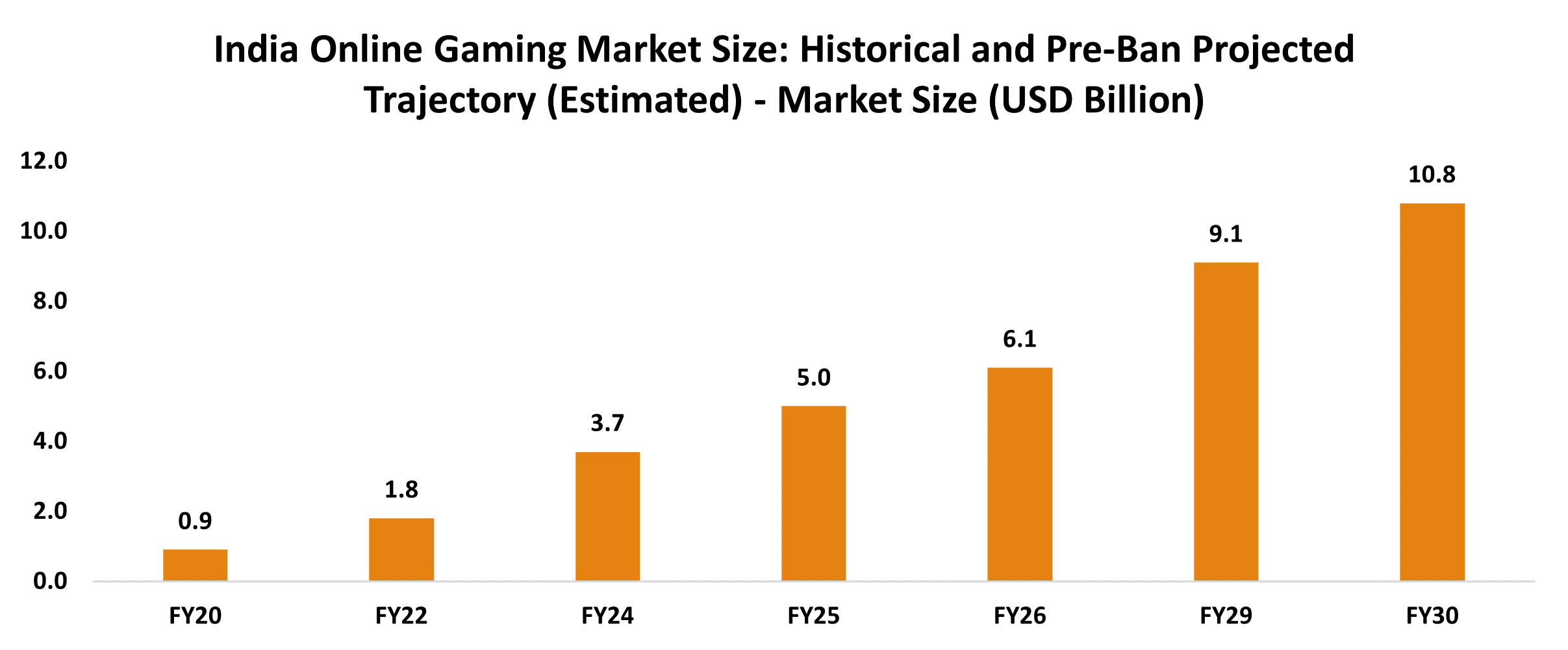
Before the crackdown, India’s online gaming ecosystem had become a massive digital industry. The market was estimated at nearly $3.7 billion, supporting over 200,000 formal jobs across technology, advertising, esports, payment systems, influencer marketing, and content creation. Around 450 million users participated in some form of online gaming activity. Some played fantasy sports casually during IPL season. Others treated poker like a side hustle with better Excel sheets. And somewhere in every WhatsApp group was always one uncle who believed he had “a system” to beat online rummy. India had built an enormous digital participation economy around gaming.
Then came the PROG Act.
The law emerged from genuine public concern. Policymakers were not imagining problems that did not exist. Stories of addiction, debt, psychological distress, and predatory platform mechanics were becoming increasingly common. Families watched young users spiral into compulsive gaming cycles. Reports linked excessive betting losses to depression and suicides. Regulators worried that platforms were engineering addiction using behavioural nudges borrowed straight from Silicon Valley’s engagement playbook, except here the dopamine came attached to real money losses.
The government therefore decided to act decisively. Under the PROG Act, any online game involving monetary stakes or expected financial gain was classified as an “online money game” and effectively banned. Only non-monetized social gaming and officially recognized esports formats survived the purge. The legislation also created the Online Gaming Authority of India (OGAI) to oversee permissible formats and compliance structures.
Note- In this article/Act, the term “gaming” has been used to collectively refer to online fantasy gaming and online betting/gambling platforms, unless stated otherwise.

Then economics entered the room.
The Problem With Banning Demand
The biggest mistake policymakers often make is confusing supply removal with demand destruction. These are not the same thing.
If millions of people already want something, banning its legal supply does not erase the desire. It merely changes who supplies it. Economists call this regulatory arbitrage. Ordinary people call it “jugaad finding a way.”
Imagine shutting down all licensed restaurants in a city because unhealthy food is bad for people. Does the demand for eating outside disappear? Of course not. What happens instead is that consumers shift toward invisible, unregulated street vendors operating without hygiene checks, pricing transparency, or accountability. The meal still happens. Only now the risks are larger.
That is exactly what happened in online gambling.
The moment regulated domestic operators were pushed out, offshore betting platforms moved in to fill the vacuum. These firms operated outside Indian jurisdiction, beyond the reach of domestic enforcement agencies. Mirror websites appeared faster than regulators could block them. VPN usage surged. Encrypted Telegram channels became distribution networks. Payment routing shifted toward crypto rails, mule accounts, and layered transaction systems designed precisely to evade oversight.
The astonishing part is not that illegal operators emerged. The astonishing part is how quickly the market adapted.
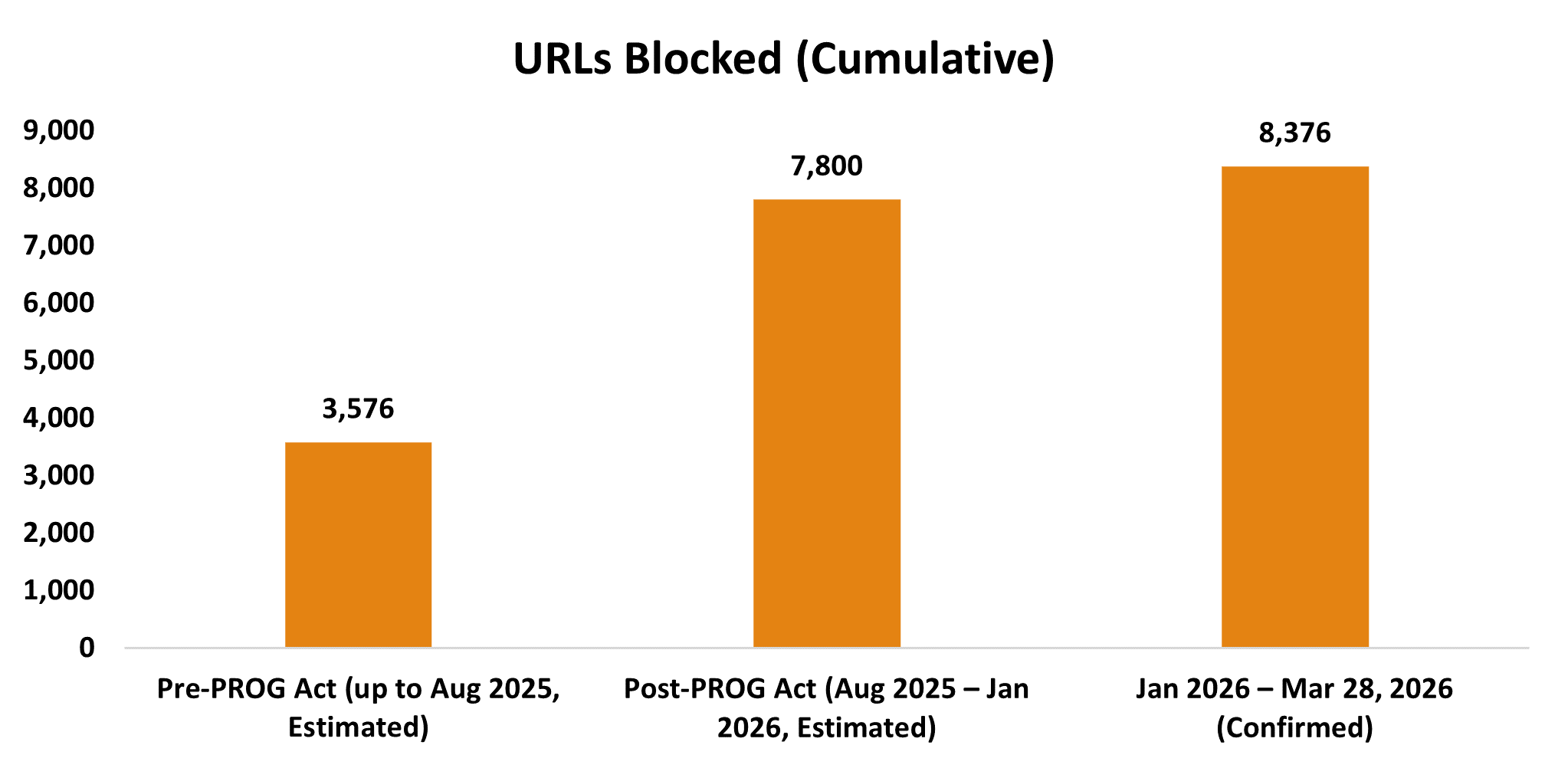
By March 2026, MeitY had blocked over 8,376 gambling-related URLs. Yet the offshore betting economy targeting Indian users expanded dramatically. Estimates now place the illegal betting market near $20 billion annually, while broader informal sports betting flows are estimated by some assessments at nearly $100 billion, or roughly ₹8.2 lakh crore.
Think about that number for a second.
India may have accidentally transformed a visible, taxable, partially regulated digital industry into one of the largest invisible informal betting economies in the world.
This is the strange arithmetic of prohibition. The legal economy shrinks. The underground economy scales.
What Actually Happened After the Ban?
The simplest way to understand what happened after the PROG Act is to imagine shutting down a crowded shopping mall while leaving every back alley in the city completely open. The crowd does not suddenly develop spiritual enlightenment and stop shopping. It simply relocates. Usually to places with worse lighting, no security cameras, and a significantly higher probability of getting scammed.
That, in essence, is what India’s online gambling market did.
The immediate visible impact of the ban looked dramatic. Legitimate domestic gaming firms collapsed almost overnight. More than 6,500 formal jobs disappeared within weeks across gaming companies, customer support operations, advertising agencies, payment integrations, esports management, and technology teams. Nearly ₹3,720 crore worth of player deposits were frozen as platforms scrambled to comply with the new legal framework. To policymakers, this initially appeared like evidence of successful enforcement. The visible market had shrunk.
But visible markets and actual behaviour are two very different things.
What happened underneath the surface was far more important.
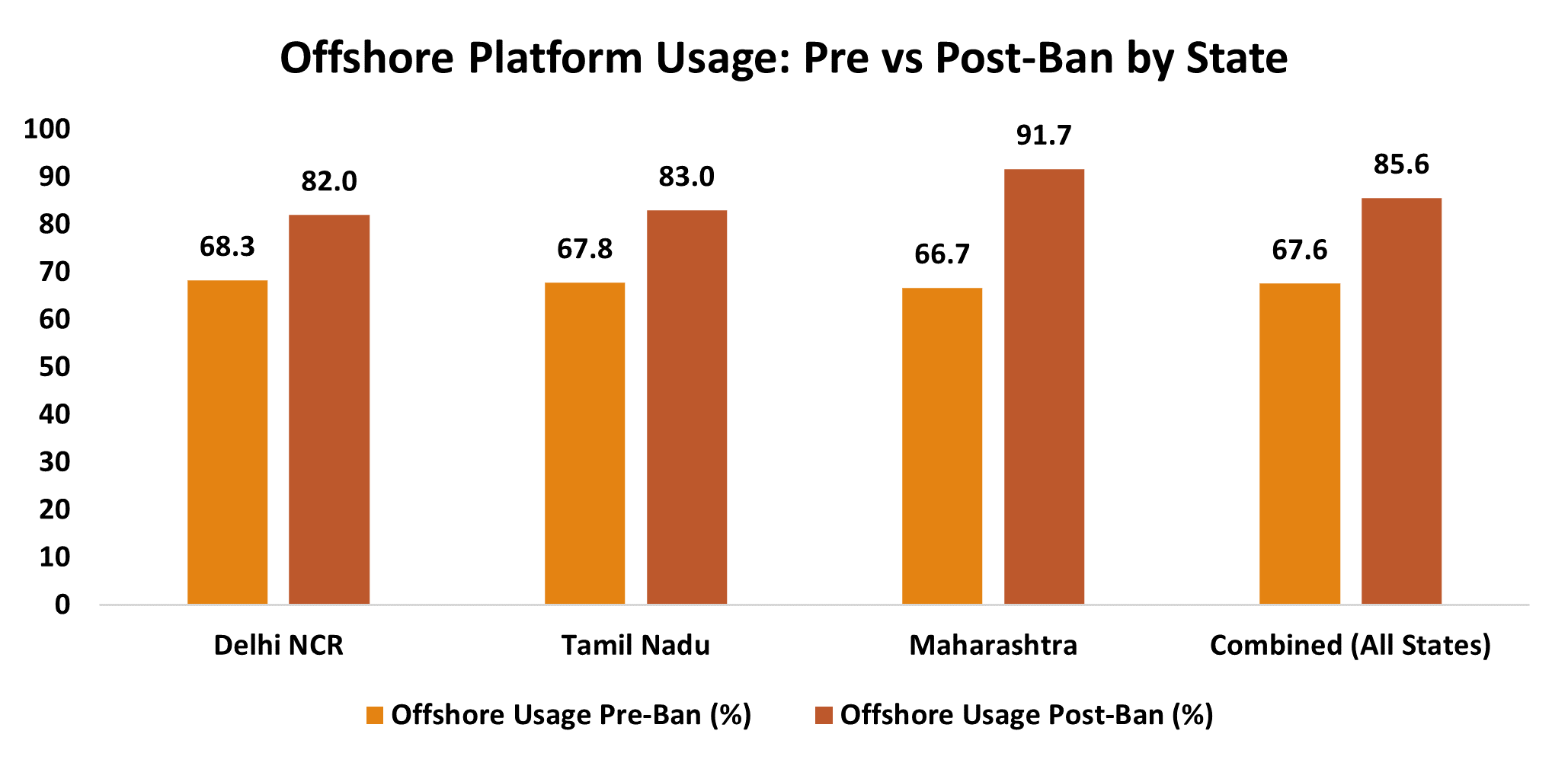
Surveys conducted by CUTS International across multiple Indian states revealed that former users of regulated domestic platforms migrated rapidly toward offshore gambling ecosystems instead of exiting gambling altogether. In Delhi NCR, offshore participation among users rose from 68.3% before the ban to 82% afterward. Tamil Nadu witnessed a jump from 67.8% to 83%. Maharashtra saw perhaps the most astonishing surge, with offshore participation climbing from 66.7% to 91.7%.
Think about what this means for a moment.
In Maharashtra, after a law designed to suppress online gambling, almost nine out of ten active users ended up on offshore platforms instead.
This is the part where economics quietly taps policymakers on the shoulder and says, “The demand curve is still here, sir.”
And the deeper problem was not merely migration. It was escalation.
The Ban Did Not Reduce Gambling. It Intensified It.
One of the most counter-intuitive findings from the post-ban data is that users did not just continue gambling; many became more deeply engaged after entering unregulated ecosystems.
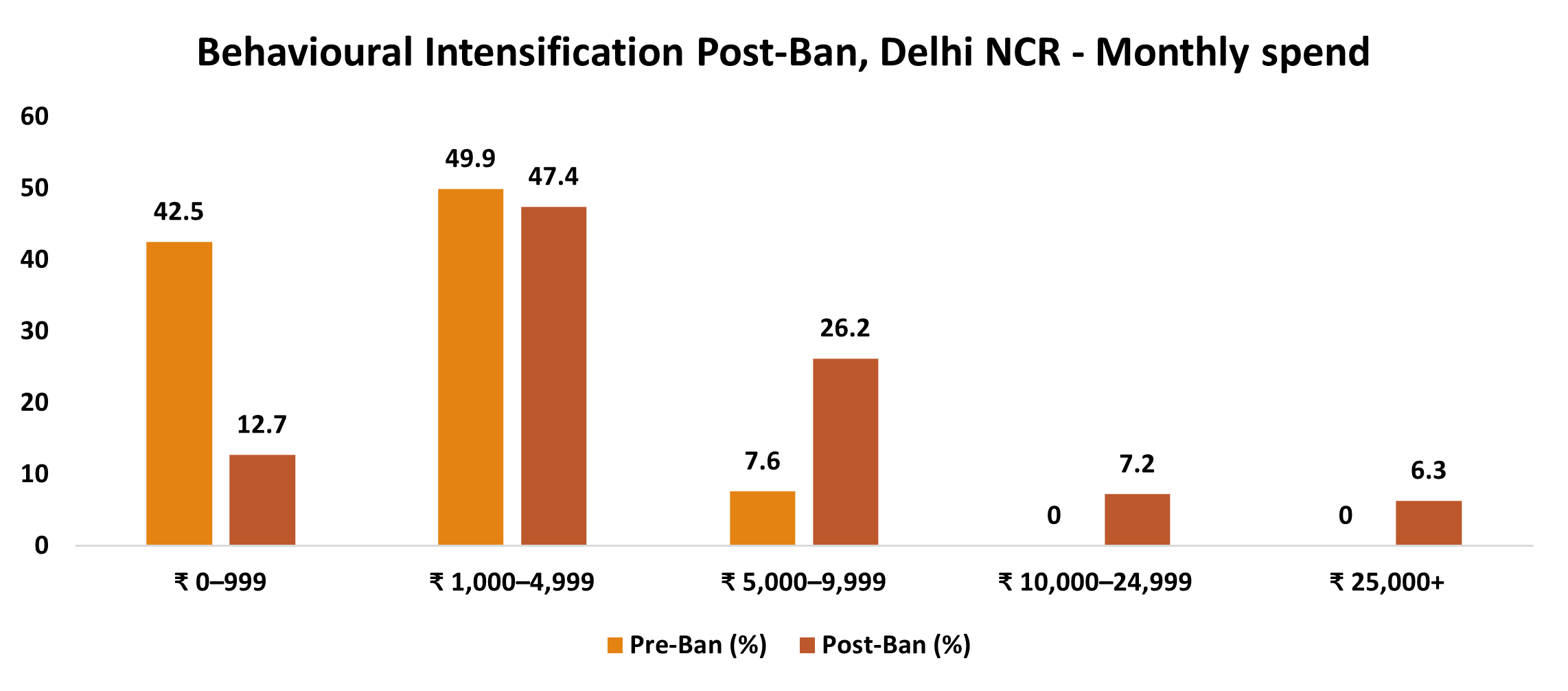
In Delhi NCR, the percentage of users accessing gambling platforms daily exploded from just 3.4% before the ban to 42.3% afterward. Users spending more than two hours per session jumped from 3.4% to 44%. High monthly spending categories saw dramatic increases, with a completely new class of users now spending over ₹10,000 monthly on gambling platforms.
This is economically important because it reveals something subtle about behavioural systems: regulated environments impose friction. Illegal environments often remove it.
Earlier domestic platforms, despite their flaws, operated under at least some compliance architecture. There were responsible gaming reminders, KYC checks, deposit controls, and visible corporate accountability. Offshore operators, however, compete in an entirely different market logic. Their business model is not long-term trust-building within a regulated ecosystem. Their business model is extraction.
The psychology here resembles what happens when food regulation disappears. Restaurants with hygiene rules may frustrate owners with compliance costs, but they also impose discipline. Remove all inspection systems, and suddenly the cheapest operators gain an advantage precisely because they ignore safety standards.
The same logic applies digitally.
Offshore gambling platforms often encourage continuous play, higher spending, instant re-deposits, and psychologically manipulative engagement loops because there is effectively nobody watching them. In many cases, addiction is not an unfortunate side effect of the business model. It is the business model.
The irony is difficult to ignore. A law introduced partly to reduce gambling addiction may have unintentionally pushed users toward platforms optimized for stronger addiction intensity.
The Internet Is Very Good at Routing Around Governments
The Indian state approached enforcement through a traditional playbook: block websites, freeze payments, remove apps, restrict access.
Unfortunately, the internet has spent the last three decades evolving specifically to survive barriers.
When regulators blocked gambling URLs, offshore operators simply created mirror domains cloned versions of the same websites hosted under slightly modified addresses. It became a technological version of the hydra from Greek mythology: cut one head off, and three more appear wearing slightly different domain extensions.
The state was fighting a decentralized digital network using tools designed for centralized physical systems.
That mismatch matters enormously.
Because the internet does not behave like a factory that can be sealed or a shop that can be shut down. It behaves more like a swarm. Adaptive. Replicating. Borderless. Slightly annoying.
Even the Payment Barriers Failed
Perhaps the most revealing failure involved payments.
Regulators assumed financial restrictions would become the ultimate choke point. If users could not transfer money to offshore operators, participation would eventually collapse.
But offshore platforms adapted quickly by integrating with domestic peer-to-peer systems like UPI using distributed proxy bank accounts. In practice, this meant users often deposited funds through networks of seemingly ordinary Indian accounts acting as intermediaries.
The result was astonishingly low friction.
According to CUTS International surveys, 93.7% of respondents described offshore deposit systems as either “easy” or “very easy.” That statistic alone tells an entire story about digital adaptation. Consumers were not struggling to access illegal platforms. Many found them almost seamless.
And once payments become friction-less, prohibition weakens dramatically.
Because modern digital economies run on convenience. The moment a transaction becomes easy, accessible, and socially normalized within online communities, legal status becomes psychologically secondary for many users. Particularly younger users who already inhabit a borderless internet culture where geography feels increasingly irrelevant.
This is why the offshore market expanded so aggressively after the ban. The law raised legal barriers. Technology lowered practical barriers.
Technology won.
Why Underground Markets Become More Dangerous
There is another economic principle hiding underneath all this: good firms usually comply with regulation. Bad firms usually evade it.
This creates what economists call adverse selection.
When the PROG Act arrived, legitimate Indian firms with offices, employees, and reputational exposure had little choice but to shut down or freeze operations. But offshore operators linked to opaque international networks faced no such constraints. In effect, the market selection mechanism flipped upside down. Compliance became a disadvantage.
The safest actors exited first.
The remaining market was increasingly populated by entities with weaker ethics, weaker transparency, and stronger incentives toward fraud.
This is where prohibition becomes genuinely dangerous.
In regulated markets, users at least possess some informational trust. They know payouts are audited. Algorithms are tested. Funds are monitored. Customer complaints can theoretically reach courts or regulators. Under prohibition, that architecture collapses completely.
And when trust disappears, exploitation expands.
Many offshore platforms reportedly manipulated algorithms, executed withdrawal scams, stole identities, or vanished entirely after accumulating deposits. Users had no realistic legal recourse because the platforms themselves often existed through shell structures spread across multiple jurisdictions.
The consumer was effectively gambling inside a legal black hole.
The Tenkasi Case: When Gambling Merges With Cybercrime
The most disturbing consequence of prohibition is that illegal gambling ecosystems rarely remain “just gambling.” They begin integrating with broader criminal infrastructures.
A striking example emerged in February 2026 in Tenkasi, Tamil Nadu, where cybercrime police uncovered a sophisticated interstate online fraud network run by six engineering graduates. That detail alone says something important about India’s digital underground economy. These were not cinematic gangsters smoking cigars in dark warehouses. They were technically skilled young individuals leveraging digital systems, payment architecture, and behavioural manipulation.
The syndicate promoted fraudulent schemes through Telegram channels using fake “Old Coin Purchase Tasks” that promised high returns. Victims were shown fake balances inside virtual wallets to build trust. Once larger sums were deposited, communication disappeared.
Classic scam mechanics. Modern digital packaging.
But the more revealing layer was the money laundering infrastructure underneath.
The operators routed stolen funds through multiple payment gateways and recruited economically vulnerable villagers to open bank accounts in exchange for small cash payments. These mule accounts were then used to move proceeds across more than 100 cybercrime cases.
This is where the economics becomes deeply uncomfortable.
Because prohibition did not merely shift gambling into the shadows. It helped create a broader ecosystem where cyber fraud, money laundering, identity exploitation, and informal financial networks became interconnected. Vulnerable citizens were transformed into infrastructure for digital crime.
In trying to eliminate one market, the state may have unintentionally strengthened several darker ones around it.
And that is the recurring lesson of prohibition throughout economic history: when legitimate systems disappear, illegitimate ecosystems rarely remain neatly contained. They spread sideways.
Governments Often Underestimate Enforcement Costs
One of the least discussed aspects of prohibition is that digital enforcement becomes exponentially expensive over time.
Physical bans are comparatively easier. You can shut a casino building. You can seize physical inventory. You can monitor geographic borders.
Digital bans are different because the internet has no meaningful borders in the traditional sense.
To sustain a gambling prohibition regime, the state must continuously block mirror websites, track encrypted payment flows, pressure VPN providers, monitor millions of suspicious micro-transactions, investigate mule bank accounts, coordinate with telecom networks, and pursue operators spread across multiple international jurisdictions.
This becomes extraordinarily resource-intensive.
And unlike physical enforcement, digital enforcement suffers from what economists would call asymmetry of adaptation. Regulators move bureaucratically. Offshore operators move algorithmically.
A government committee may take weeks to issue a blocking order. A mirror domain can be generated in minutes.
That asymmetry compounds over time.
Eventually, the state risks entering a position where enforcement itself consumes massive institutional capacity while producing progressively weaker outcomes. It becomes a treadmill where the running never stops, but the scenery never changes.
Prohibition Accidentally Makes Illegal Operators More Competitive
Here is the truly ironic part.
By banning regulated domestic operators while offshore firms continue functioning outside Indian jurisdiction, the state unintentionally changes the economics of competition in favour of illegal platforms.
Because offshore operators avoid almost every cost that regulated firms must bear.
They do not pay licensing fees. They do not integrate expensive responsible gaming systems. They do not perform meaningful KYC checks. They do not comply with GST rules. They do not deduct taxes on winnings. They do not maintain audited compliance infrastructure.
This dramatically lowers their operating costs.
And lower costs create stronger customer incentives.
Illegal operators can therefore offer better odds, larger bonuses, higher payouts, faster onboarding, and frictionless deposits compared to heavily taxed domestic alternatives. To price-sensitive consumers, especially younger digital users, the illegal platform often starts looking economically superior.
This is the dangerous paradox prohibition creates.
The state tries to weaken illegal markets but accidentally improves their competitive advantage.
In economics, incentives matter more than intentions.
And the incentive structure here increasingly pushes users toward the very platforms regulators wanted them to avoid.
The Taxation Paradox
Perhaps the most economically painful outcome of the PROG Act is the sheer scale of fiscal destruction it may have triggered.
Before prohibition, India’s regulated gaming ecosystem was generating substantial tax revenue through GST collections and taxation on winnings. Estimates suggested the sector contributed roughly ₹20,000 to ₹22,000 crore annually to the exchequer.
That revenue stream effectively evaporated once the domestic market collapsed.
But the gambling activity itself did not disappear.
This is what makes the situation so paradoxical. India may have destroyed the taxable layer of the industry while leaving the underlying transaction flow largely intact.
Imagine banning restaurants but discovering people are still eating exactly the same number of meals except now every transaction happens in invisible cash kitchens beyond taxation systems. The consumption survives. The tax base dies.
That is essentially what happened digitally.
Meanwhile, offshore betting inflows targeting Indian users are now estimated at nearly ₹8.2 lakh crore annually. If even a fraction of this activity operated inside a regulated domestic framework, the taxation potential would be enormous.
The arithmetic becomes staggering.
At a 28% GST rate alone, the government may be losing over ₹2.29 lakh crore annually in uncollected indirect taxes. Add taxation on winnings, and total annual leakage estimates approach nearly ₹3.89 lakh crore.
To put that into perspective, these are not “industry numbers” anymore. These are macroeconomic numbers.
Numbers large enough to finance public infrastructure, digital policing systems, addiction treatment programs, cybersecurity investments, or entire social welfare expansions.
Instead, large portions of these flows now disappear through hawala channels, shell structures, proxy accounts, and unregulated crypto systems beyond meaningful domestic oversight.
The state loses revenue. The financial system loses transparency. Consumers lose protection. And offshore networks gain scale.
That is not the elimination of gambling. That is the privatization of gambling profits combined with the socialization of gambling harms.
The Regulatory Trade-off: Ban vs Regulation
At the heart of this entire debate lies a question governments across the world are slowly being forced to confront:
What do you do when a risky activity becomes digitally unstoppable?
Do you ban it completely and hope fear defeats demand? Or do you regulate it tightly, accept that some level of participation will continue, and focus on reducing harm instead of pretending elimination is possible?
This is not just a gambling question. It is increasingly becoming the defining governance challenge of the internet age.
Because modern digital economies behave less like obedient factories and more like water pipelines under pressure. Block one opening, and the flow reroutes itself through another channel. Usually one harder to monitor and significantly dirtier.
That realization is why several countries have gradually shifted away from blanket prohibition toward controlled regulation models. Not because they suddenly became morally enthusiastic about gambling, but because they discovered something uncomfortable: regulated vice is often safer than invisible vice.
The difference between the two systems is enormous.
Under blanket prohibition, the market fragments into offshore websites, Telegram groups, crypto transfers, mule accounts, and cybercrime-linked ecosystems. The state loses visibility entirely. Consumers lose legal protection. Enforcement costs explode endlessly because regulators are trapped in an infinite game of digital whack-a-mole.
Under controlled regulation, however, the market becomes visible. Operators require licenses. Transactions move through monitored banking systems. Algorithms are audited. Users can self-exclude. Spending patterns become trackable. Fraud becomes prosecutable. Taxation becomes possible.
In other words, regulation does not eliminate gambling. It makes gambling governable.
And governability matters enormously in economics.
Because policymakers often underestimate one critical reality: visibility itself is a form of regulation.
Why Some Countries Chose Regulation Instead
The most fascinating part of the global gambling story is that some of the countries now embracing regulated frameworks are not traditionally associated with permissive social policies.
Take the United Arab Emirates.
For decades, the UAE maintained extremely conservative attitudes toward gambling. Yet in September 2023, it established the General Commercial Gaming Regulatory Authority (GCGRA) to oversee commercial gaming activities, including online gaming and sports wagering.
This was not ideological liberalization. It was institutional realism.
The UAE recognized that digital gambling was becoming globally networked and technologically unavoidable. Instead of allowing offshore operators to dominate invisibly, it chose to construct a centralized licensing framework. Verified operators could legally function under strict compliance structures involving age-gating, self-exclusion systems, financial audits, and monitored digital payments.
The logic was simple: if gambling demand exists anyway, better that it exists inside a monitored framework than inside encrypted chaos.
Even Sri Lanka moved in a similar direction.
Under the Gambling Regulatory Authority Act of 2025, Sri Lanka replaced fragmented legacy laws with a centralized regulator overseeing both physical and digital gambling systems. Online operators were brought under licensing norms, software algorithms became auditable, and real-time reporting systems were introduced.
Again, the important insight here is not that these countries “encouraged” gambling.
They accepted that internet-era prohibition carries severe limitations.
There is a subtle but profound distinction between approving of an activity and recognizing its inevitability. Mature regulation often begins when governments stop confusing the two.
Conclusion: The State Cannot Ban Human Nature
At its core, the PROG Act story is not really about gambling. It is about a much older conflict between human behaviour and state ambition.
Governments often imagine regulation as a switch. Illegal today, gone tomorrow. But economies do not work like switchboards. They work like ecosystems. Incentives adapt. Consumers reroute. Technology evolves. Capital flows around barriers the way water flows around rocks. And in digital markets, water moves very fast.
This is why the most important lesson from the PROG Act may not be whether online gambling is morally good or bad. That debate will continue forever, usually on prime-time television panels where five people shout simultaneously while a ticker announces “Nation Wants To Know.” The more important question is whether prohibition actually reduced harm.
The deeper issue here is that India is entering a new phase of governance where older regulatory instincts are colliding with borderless digital systems. In the physical world, states controlled factories, shops, casinos, and checkpoints. In the internet economy, however, the “shop” may exist across six jurisdictions, accept crypto payments through three intermediaries, advertise through Telegram, and onboard users through a mirror website created ten minutes ago by an automated script.
This changes the meaning of enforcement itself.
The internet has fundamentally altered the balance between state control and consumer autonomy. And many governments globally are still struggling to emotionally accept this shift. The instinctive response remains prohibition because prohibition feels decisive. Regulation feels messier. Nuanced policy rarely produces dramatic headlines.
But mature governance is often about accepting trade-offs instead of fantasizing about perfect outcomes.
A regulated market is not a perfect market. Gambling addiction would still exist. Financial distress would still exist. Human irrationality would still exist because, unfortunately for policymakers, Homo sapiens did not evolve into spreadsheets. People will continue making questionable decisions at 2 a.m. with overconfidence and poor impulse control. Entire industries from dating apps to stock market bubbles already depend on this fact.
Sources- ET, ETEdge, PIB, Financial Express, Economics Times, IgamingToday, LiveMint, Investing.com, Pinsent Mason, Conventuslaw & TOI.